
Blind loyalty to a business is no longer common in today's market. Many customers actively shop around, compare alternatives, and switch providers when they find better pricing or features.
Gartner’s 2024 CMO Spend Survey found that 73% of marketing leaders feel pressure to “do more with less.” This shift means CX improvements need to be intentional, focused, and streamlined—exactly what a structured customer success plan delivers.
Companies can fight back by using proactive customer success plans that engage existing clients while attracting new ones through proven investment in client outcomes.
What is a customer success plan?
A customer success plan is a structured roadmap for companies to document client goals, align their services with the client’s operational and strategic requirements, and track progress through clearly defined, quantifiable performance milestones.
The customer success plan shows customers how invested you are by mapping out how your goals connect with theirs. CSMs (Customer Success Managers) document this alignment using visual roadmaps, clear milestones backed by data, and scheduled touchpoints that prove your commitment goes beyond the initial contract signature.
Customer success vs customer service
Customer service is the traditional reactive approach to client support, working through ticketing systems like Zendesk or Freshdesk, where support agents respond to phone calls, emails, and chat messages after problems occur. This model focuses on solving issues, answering questions, and meeting needs through one-time interactions.
The difference?
Customer service operates as a passive business function waiting for customers to reach out, while a customer success strategy works proactively through scheduled engagement.
Customer success teams stay in continuous contact with client organizations, tracking brand alignment, mission objectives, strategic vision, and core values throughout the customer lifecycle. Starting from onboarding and continuing through adoption phases, CS teams conduct regular check-ins to ensure they're delivering targeted value tied directly to each client’s success metrics.
When to use a customer success plan
Customer success plans are living documents that you use during three critical phases:
- Initial client onboarding
- Service expansion when upgrading or adding features
- Ongoing relationship management through regular business reviews
These plans guide clients through their key performance indicators (KPIs) like product adoption rates, feature usage, and customer health scores.
Onboarding new clients
During the first meeting with a new client, customer success managers at companies discuss the client's vision and map out how their platform will support those goals. Introducing a customer success plan at this stage builds a strong foundation for the relationship.
CSMs present a comprehensive document that outlines shared objectives, strategies, milestones, and the path forward. This presentation builds trust from the first interaction and shows commitment to client success beyond the initial sale.
“First impression is always the lasting impression. That means that CSM should identify “wow moments” early on and go beyond the scope - underpromise and overdeliver.”
Stan Stojanovic, Customer Success and Growth Partner
Expanding services
Customer success plans become relevant again when a client's business grows or expands into new markets. As clients reach milestones like increased user counts, higher revenue, or new product launches, they'll want to review their progress and plan next steps.
CSMs can revisit the original plan created in tools like Qwilr and show their role in the client's success to date. This meeting also presents an opportunity to explain how additional services or upgraded tiers align with the client's future goals. The updated success plan maps how the next growth stage connects with available features and support levels.
Ongoing relationship management
Regular meetings with customers keep the success plan active and relevant. Setting recurring business reviews—whether monthly, quarterly, or tied to specific milestones—ensures clients understand the ongoing partnership value. These check-ins also keep both parties accountable for commitments made in the plan.
These regular meetings strengthen the partnership and keep both sides focused on shared objectives tracked through metrics.
Benefits of customer success planning
Customer success planning helps companies keep more customers, grow revenue from existing accounts, and spot problems before clients leave. Let’s have a look at the specific benefits they lead to.
Increase customer retention and revenue
Building stronger relationships with customers through documented shared goals leads to longer client lifecycles and higher revenue. When CSMs track goals and check in regularly, clients feel supported and are less likely to cancel.
Marc Benioff, CEO of Salesforce, emphasizes this approach: "Most of all, I discovered that in order to succeed with a product, you must truly get to know the customers and build something for them."
Focusing on client outcomes helps improve retention rates. Higher retention means ongoing revenue, reduced acquisition costs, and more opportunities to upsell additional features or cross-sell complementary services as client businesses expand.
Reduce customer churn
Maintaining regular contact with customers and tracking their product usage through analytics in tools naturally reduces churn rates. These platforms help CSMs identify at-risk accounts before they cancel.
Customers who don't feel valued or receive proactive attention are more likely to disengage quietly. When they eventually need services again, they'll shop around for different providers.
Gartner analyst Leah Leachman notes that improving CX isn’t always about adding more processes—often, it’s about simplifying them.
“Leaders should examine what they can subtract to enhance CX, rather than defaulting to additive thinking that increases complexity and effort.”
Applying this mindset to customer success planning helps prevent overwhelm, confusion, and silent disengagement.
Customer success plans with scheduled check-ins and documented milestones prevent this scenario by keeping engagement levels high.
Identify upsell opportunities
Strong client relationships make it easier to spot when customers need additional products or upgraded service tiers. Regular business reviews keep CSMs informed about client growth, changing needs, and expansion plans tracked through CRMs like Pipedrive.
As customer demand increases—whether through team growth, new use cases, or geographic expansion—CSMs can present relevant upsell options with data showing how additional features align with client goals.
Maintain consistency
Inconsistent service delivery damages client trust. As customers work to grow their businesses and maintain reliability for their own clients, they expect the same stability from their vendors.
Customer success plans created in platforms like Qwilr provide a documented framework that ensures consistent support throughout the client lifecycle.
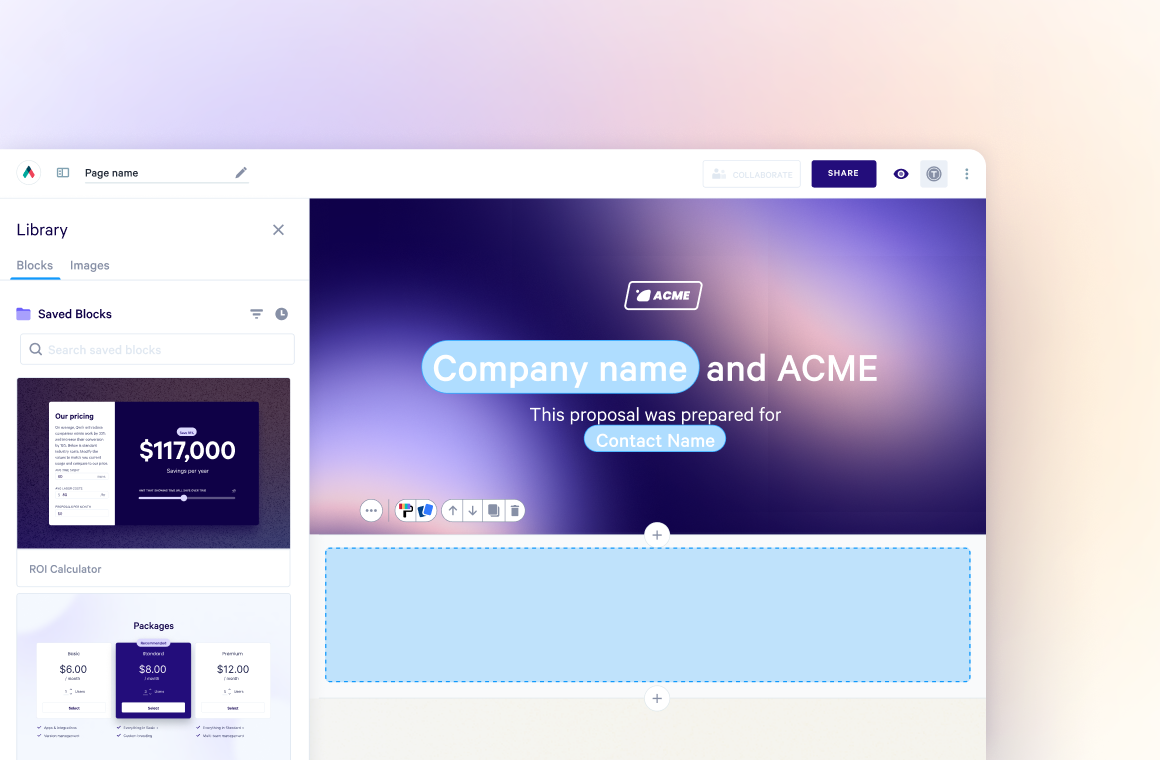
These plans outline service commitments, response times, check-in schedules, and escalation paths so clients know what to expect at every stage.
Who owns customer success plans?
Customer success plans work best when both the customer success manager and the client share ownership. Both parties should stay informed about any changes or updates to the plan.
The CSM builds the original plan and keeps it updated. They track client progress using data from CRM systems, gather feedback from the client, and share updates with their internal team.
The client plays an active role in defining what success means for their business. They raise questions, flag challenges or roadblocks, and provide insights about their industry and goals. As experts in their own field, clients contribute the critical context needed to create realistic success plans.
This shared ownership creates buy-in and accountability on both sides, making it more likely that both parties will follow through on commitments.
Key components to include in your customer success plan
Every customer success plan needs certain core elements to be effective. Here's what to include:
Thorough onboarding
Start by showing clients that the CSM understands their brand, mission, vision, and values. The initial plan created in Qwilr maps how the vendor's services align with those elements. This first meeting sets the foundation for the entire partnership.
Goals and milestones
Every plan needs clear, measurable goals and a roadmap to reach them. Break large goals into smaller milestones that show progress over time. For each milestone, document what the vendor will contribute and what the client needs to do.
Check-in dates
Schedule future meetings during each current meeting. Some companies set regular check-ins based on calendar intervals, while others tie meetings to specific milestones like product launches or adoption targets.
For best practices on structuring these regular reviews, see our guide to effective quarterly business reviews.
Feedback loops
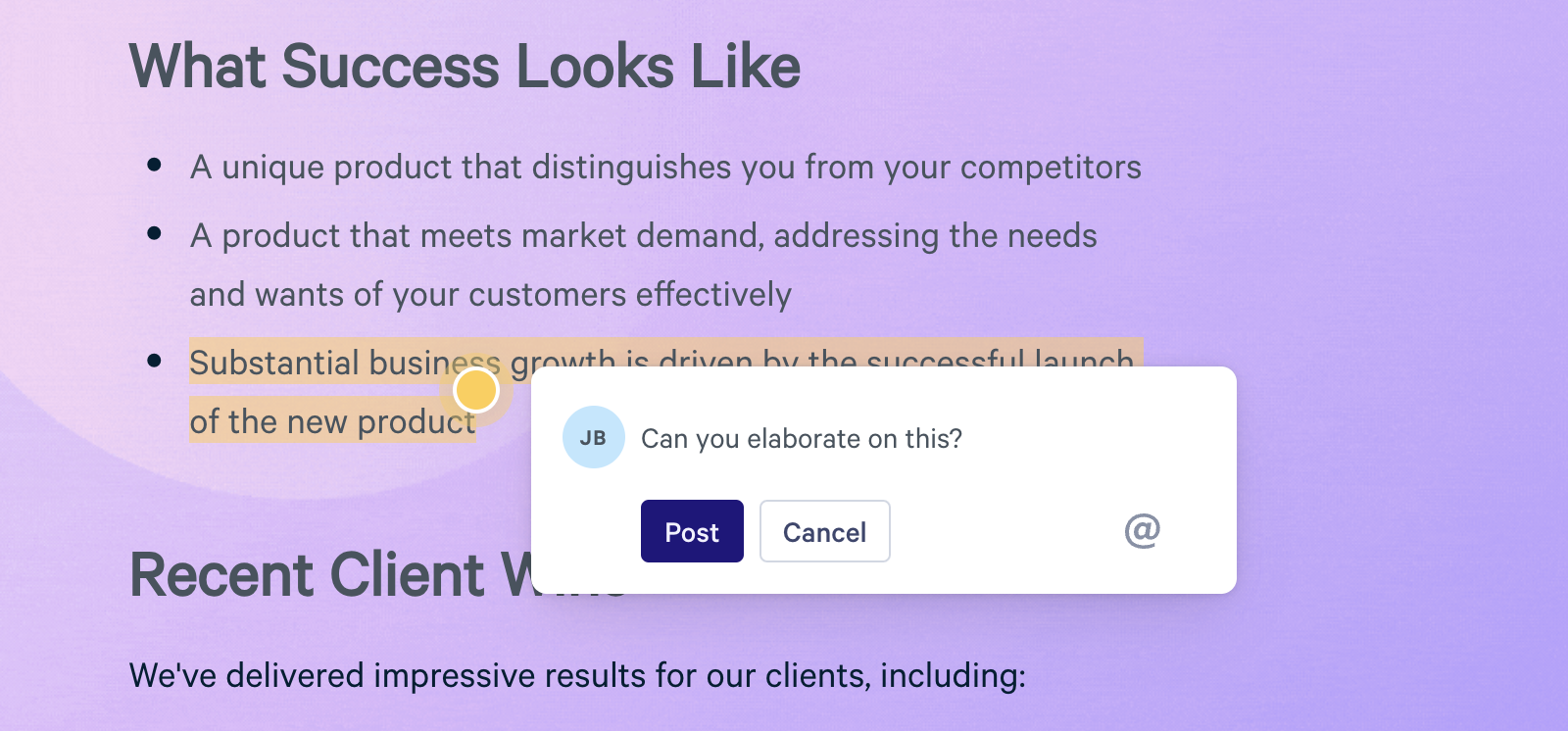
Build in clear ways for clients and team members to share feedback and for CSMs to respond. Decide on communication channels whether through CRM applications like Pipedrive, email, project management tools like Monday.com, or all three.
Using Qwilr's commenting feature, team members can leave feedback directly on specific sections of the success plan
Educational resources
Give clients access to customer enablement materials like training materials, video tutorials, documentation, webinars, and knowledge base articles. Include direct links in the success plan so clients can find help when they need it without having to ask.
Data and metrics
Base all decisions, goals, and recommendations on real data rather than assumptions. Include links to sources, show the analysis, and explain the conclusions. Outline these metrics in your proposed plan so customers can track product usage, support needs, and feature adoption over time. This approach builds trust and gives both sides a clear view of progress.
How to build an effective customer success plan, according to experts
Creating a customer success plan requires preparation before presenting it to clients. Customer success experts recommend following these steps to build plans that keep clients engaged and on track toward their goals.
Create a customer journey map
Start by mapping where the client is at during the onboarding stage and plot their path through key milestones and goals. This visual roadmap, created in tools like Lucidchart, Miro, or Qwilr, helps CSMs stay proactive throughout the relationship.
As Stan Stojanovic, Founder of frontBrick sales agency, says, “At-risk accounts are usually at that stage due to lack of proactiveness to recognize a churn risk ahead of time.”
By the time a client becomes "at risk," it may be too late to save the relationship. A journey map lets CSMs spot warning signs early and take action before problems escalate.
Get to really know what success looks like for your customers
Strong partnerships require ongoing conversations about what success means to the client. CSMs should regularly discuss client goals and then align their services to support that vision.
Stan emphasizes:
“It’s crucial to always understand business objectives. Everything should tie back to business impact. Expectations should be managed early on, and you should always aim to get an agreement with the customer before you start working together.”
Stan Stojanovic, Customer Success and Growth Partner
The process works like this: gather client input, create the journey map, get feedback, and adjust the plan—all before starting the engagement.
Align the plan with broader company goals
Every customer success plan should connect directly to the client's business goals. CSMs need to understand the client's brand, mission, vision, and values so every milestone ties back to what matters most to their business.
Carissa Phillips, Enterprise Customer Success Manager at Qwilr, notes:
“One-off goals are fine, like meeting a specific deadline. However, for actual relationship building, incremental progress goals are most valuable and need to include a conversation schedule. Relationships only work if people talk with one another.”
Regular conversations help CSMs ensure the success plan stays aligned with client priorities as those priorities shift over time.
Use a customizable template
Starting with a customer success plan template like Qwilr's saves time and reduces stress. These templates come with sections for goals, milestones, check-ins, and metrics that CSMs can customize with client-specific information, embedded links, images, and data pulled from CRMs like Pipedrive.
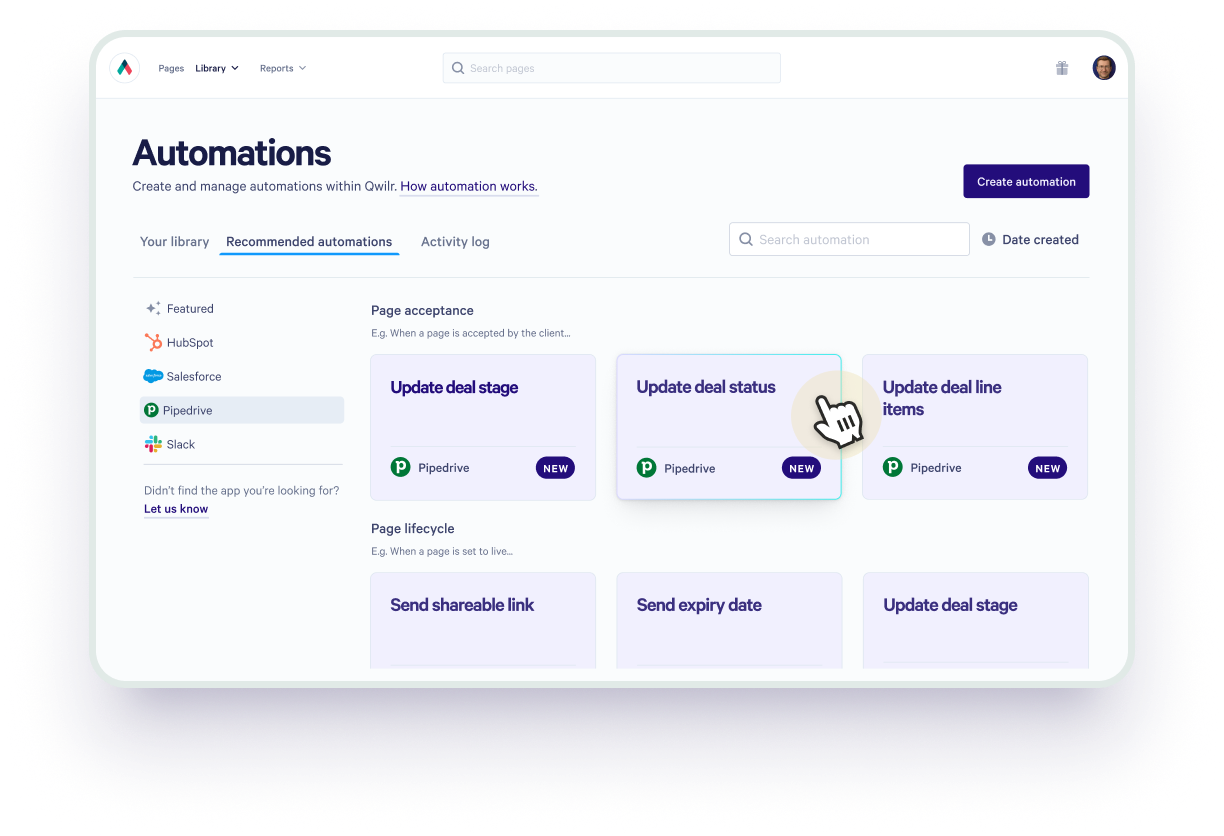
Templates give CSMs a head start on building strong client relationships without starting from scratch each time.
Use real examples from existing customers
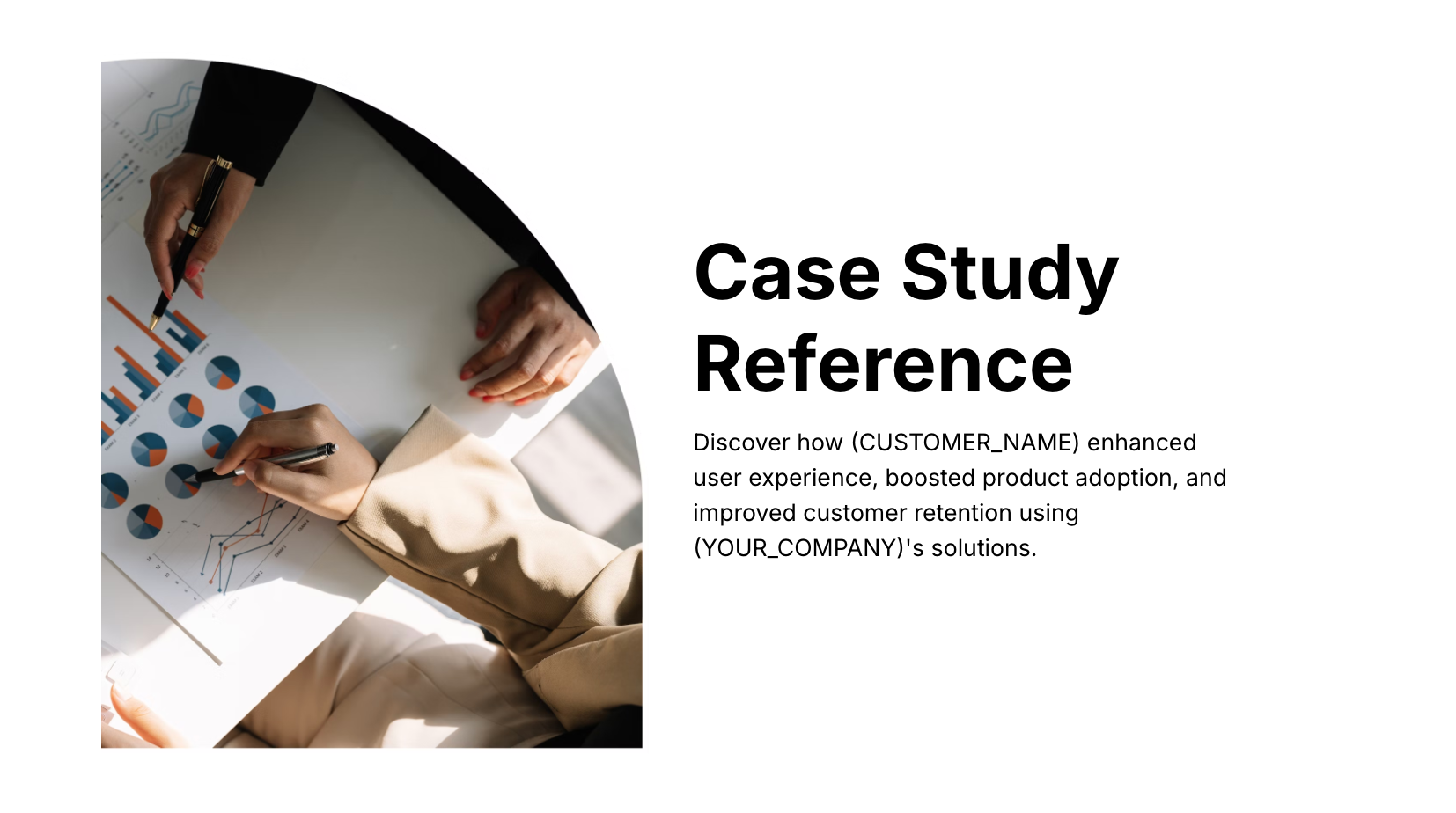
Include case studies in customer success plans to show clients what's possible. When setting milestones and goals, show examples of previous wins with similar campaigns or approaches from comparable companies.
Providing concrete examples backed by data helps clients see how customer success strategies have worked in similar situations. This proof makes clients more confident in the plan and more likely to follow through on their commitments.
Track key customer success metrics and KPIs
Customer success teams should continuously track client progress toward milestones and goals. CSMs can update the success plan with current metrics and KPIs in platforms like Qwilr, Gainsight, or Salesforce, so any team member can quickly check on client health.
Georgia Mobley, Customer Success Manager at Qwilr says:
“If a CSM has a close relationship with customers and takes notes on their needs, they are able to send that information into our product team, who can consider catering development to customer needs.”
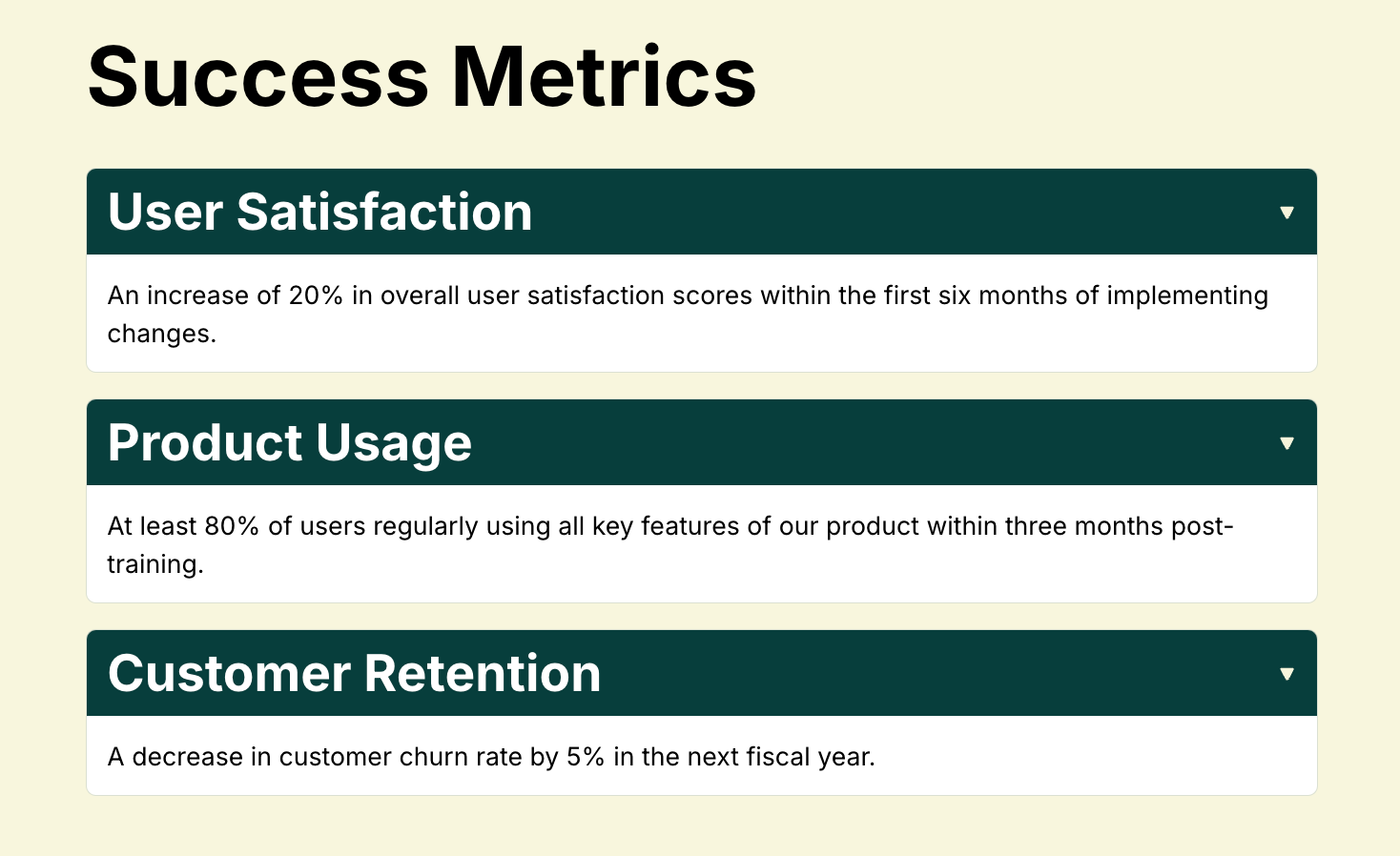
Use Qwilr’s smart editor to and customizable proposal templates to communicate KPIs clearly
Set out your action plan
Every customer success plan meeting should end with a clear action plan for reaching the next set of milestones. CSMs should outline specific steps, assign ownership for each task, and set realistic deadlines.
For example, if the goal is to increase product adoption by a certain feature launch date, the action plan might include scheduling training sessions, discussing strategies, and setting up follow-up calls to answer questions.
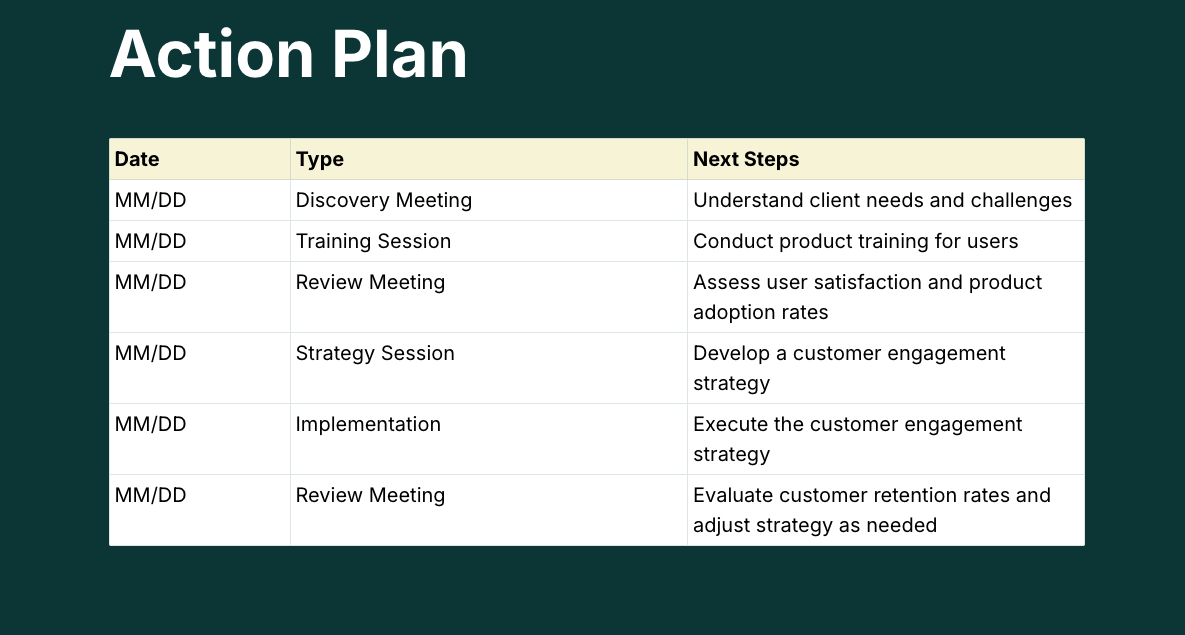
This clarity keeps both sides accountable and moving forward. When clients know exactly what they need to do and when, and what the CSM will handle, there's less confusion and more progress between meetings.
Gather customer feedback and iterate
Collect feedback at every stage and adjust the plan accordingly.
Georgia notes: "Listening to your customer's needs and feedback can alter the course of the training."As clients share what's working and what isn't, CSMs update the success plan to reflect new priorities or address challenges.
Outline next steps
Always end a customer success plan meeting by documenting next steps. The plan should clearly state which goals come next, what actions each party will take, and when the next check-in is scheduled.
Georgia Mobley emphasizes:
"Make sure you are speaking regularly to a good team champion. Record calls and send good follow-up emails with documentation to back up the training. And always give them the next steps so they know what to do to move forward in the process. Then, try to stick to the timeline or have a goal for a 'go live' date."
Clear next steps keep momentum going and prevent clients from getting stuck between meetings.
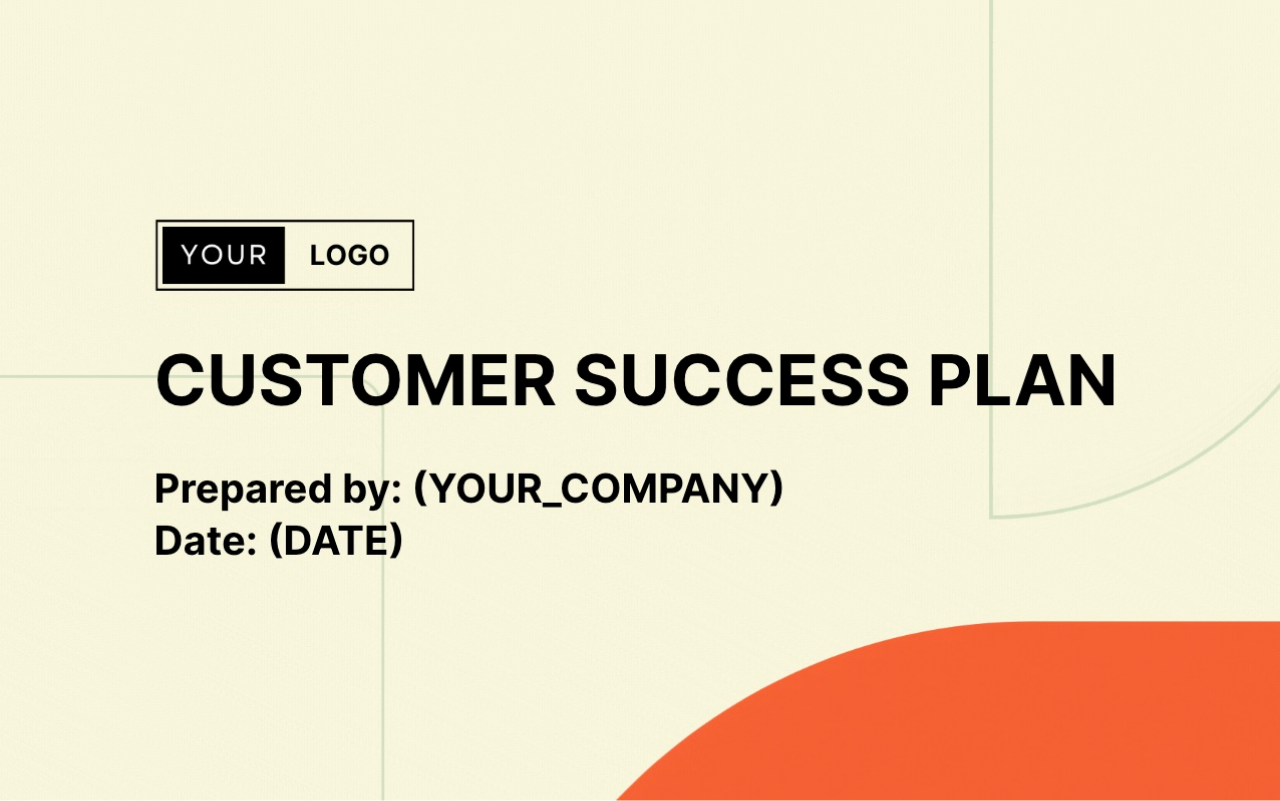
Customer success plan template
Qwilr offers a customizable template for your customer success plan that can be tailored not only to your company but to each customer you work with.
You can add your company’s logo, colors, and other branding elements. Then, you’ll fill in the sections with relevant information about each of your customers’ success strategies. The template includes features like embedded content, so you can add links, and an ROI calculator, so you can show your customers exactly what they’ll get back from their investments.
Real-life customer success plan examples to learn from
To give you a sense of the level of success you can achieve with your customers by using a customer success strategy, take a look at these businesses.
Slack
Slack may be one of the fastest-growing businesses that has gotten that way through a focus on the customer in the last decade. The company has made it a primary mission to listen to customer feedback and respond quickly. For this reason, it now has an estimated 38.8 million active daily users.
Microsoft
A much older company, Microsoft has been able to stay competitive in its market by providing a customer success manager for all new enterprise clients. This white-glove approach to customer service lets customers know how much they’re valued from day one.
Dropbox
Finally, Dropbox has seen amazing growth in recent years as it has shifted toward a customer-centric approach to business. Their onboarding process is designed to be personalized. The company takes a proactive view of its customers, ensuring Dropbox is aligned with its customers’ goals.
Create winning customer success plans with Qwilr
In the end, taking a customer-centric approach to business is the clear path to success for both your business and your customers. Creating a customer success plan is a large part of that approach.
Sign up for a free trial of Qwilr’s customer success plan template today.

About the author

Kiran Shahid|Content Marketing Strategist
Kiran is a content marketing strategist with over nine years of experience creating research-driven content for B2B SaaS companies like HubSpot, Sprout Social, and Zapier. Her expertise in SEO, in-depth research, and data analysis allow her to create thought leadership for topics like AI, sales, productivity, content marketing, and ecommerce. When not writing, you can find her trying new foods and booking her next travel adventure."